
Adjectives ending in ED and ING
English Grammar Notes
There are many adjectives that we have in English that end in -ED or -ING.
Yes, that's correct, they are not only endings that we use for verbs!
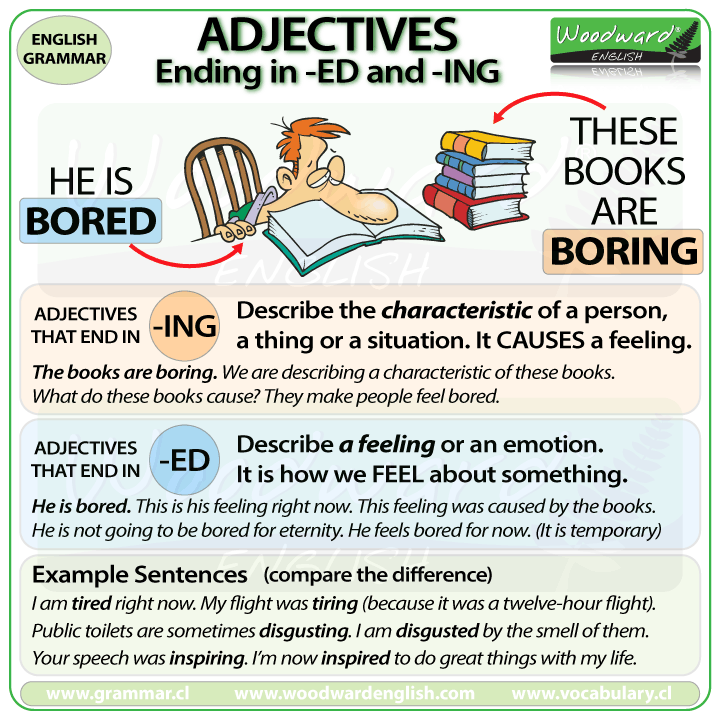
An adjective that ends in -ING is used to describe: the characteristic of a person, a thing or a situation.
An adjective that ends in -ED is used to describe: a feeling (or how a person feels) or an emotion. It is used to describe a temporary thing. Since only people (and some animals) have feelings, -ed adjectives cannot be used to describe an object or situation.
Compare the difference:
- My girlfriend is bored. - (My girlfriend feels bored)
- My girlfriend is boring. - (My girlfriend is a boring person)
You can use these adjectives to describe people or situations but be careful that you are using the correct adjective. For example, there is a big difference in meaning between:
- I am confused. - (I don't understand something)
- I am confusing. - (I will cause you to be confused)
Note that the sentences below are to highlight the difference between the two types of adjectives. They are NOT common to do or say because they sound repetitive.
- I was shocked by how shocking the accident was last night.
- They were frightened by the frightening roller-coaster ride!
- I am annoyed by how annoying that person in front of us is.
- Sally was confused by the confusing street signs in the city.
Example sentences of adjectives ending in -ED and -ING
- This grammar lesson is boring. I am bored reading all about these grammar rules.
- I am tired right now. My flight was tiring (because it was a twelve-hour flight).
- Public toilets are usually disgusting. I am disgusted by the smell in some of them.
- Your speech was very inspiring. I am now inspired to do wonderful things with my life.
Also see our article about the Pronunciation of words ending in -ED.
Summary chart
List of Adjectives ending in -ED and -ING
There is quite a long list of adjectives ending in -ED and -ING in English, and most of them are based on a verb that can be changed into an adjective by adding either -ED or -ING.
Some of the more common ones include:
- Alarmed - Alarming
- Aggravated - Aggravating
- Amused - Amusing
- Annoyed - Annoying
- Astonished - Astonishing
- Astounded - Astounding
- Bored - Boring
- Captivated - Captivating
- Challenged - Challenging
- Charmed - Charming
- Comforted - Comforting
- Confused - Confusing
- Convinced - Convincing
- Depressed - Depressing
- Disappointed - Disappointing
- Discouraged - Discouraging
- Disgusted - Disgusting
- Distressed - Distressing
- Disturbed - Disturbing
- Embarrassed - Embarrassing
- Encouraged - Encouraging
- Entertained - Entertaining
- Excited - Exciting
- Exhausted - Exhausting
- Fascinated - Fascinating
- Frightened - Frightening
- Frustrated - Frustrating
- Fulfilled - Fulfilling
- Gratified - Gratifying
- Inspired - Inspiring
- Insulted - Insulting
- Interested - Interesting
- Moved - Moving
- Overwhelmed - Overwhelming
- Perplexed - Perplexing
- Pleased - Pleasing
- Relaxed - Relaxing
- Relieved - Relieving
- Satisfied - Satisfying
- Shocked - Shocking
- Sickened - Sickening
- Soothed - Soothing
- Surprised - Surprising
- Tempted - Tempting
- Terrified - Terrifying
- Threatened - Threatening
- Thrilled - Thrilling
- Tired - Tiring
- Touched - Touching
- Troubled - Troubling
- Unsettled - Unsettling
- Worried - Worrying
Next activity
Check out our interactive game to practice: Adjectives ending in -ED and -ING
Check out our grammar notes about Compound Adjectives which sometimes contain both adjectives and adverbs.
If you found this grammar guide about Adjectives ending in -ED and -ING useful, let others know about it.


