
Present Tense vs. Progressive Tense
English Grammar Rules
NOTE: The Present Progressive Tense is sometimes called the Present Continuous tense.
Simple Present Tense
We use the simple present tense:
1. For facts
- Whales live in the ocean.
- Aconcagua is the highest mountain in Latin America.
- The flight from Chile to Australia is thirteen hours.
2. For repeated or regular actions
- Flights to Buenos Aires leave every hour.
- I eat breakfast at the table.
- We work every day of the week.
3. For habits
- I brush my teeth three times a day.
- He only drinks milk.
- We celebrate Christmas on the twenty-fifth of December.
4. For things that are generally true in the present time period:
- Boca Juniors is the best team in Argentina at the moment.
- She is my girlfriend.
- We study English.
Present Progressive Tense
We use the present progressive tense:
1. When somebody is doing something at this moment.
- Sarah is changing her clothes right now.
- Her boyfriend is waiting for her.
- We are learning the progressive tense in English.
2. When something is happening at this moment. When the action has started but hasn't finished.
- It is snowing at the moment.
- The economy is growing at an exponential rate.
- The children are sleeping so please be quiet.
3. To talk about something that is happening around the time of speaking but not necessarily at that exact moment.
- Alfredo is studying a lot for his exam.
- I'm reading a great book. (Not necessary right at this moment)
- We are planning a trip to Jamaica.
Present vs. Progressive Tense
A significant difference between these two tenses is we use the simple present tense for things that are permanent or are in general and the present progressive tense for things that may change or are temporary.
Compare:
| Permanent | Temporary |
|---|---|
| Simon lives in Birmingham. | Simon is living with his friends for now. |
| James works at a bank. | James is working at home today. |
| We walk to work. | We're walking in the park. |
| I speak English. | I am speaking English right now. |
Verbs that we don't use in the Progressive Tense
Another difference is that there are some verbs in English that we don't use in the progressive tense. These include:
Belong - Cost - Hate - Have (possession) - Hear - Know - Like - Love - Need - Own - Remember - Seem - Smell - Understand - Want
Different Meanings
In questions the same verb can change the meaning depending on if it is in the present or the present progressive tense.
| Differences in meaning of verb | |
|---|---|
| Statement | Meaning |
| What do you do? | What is your job? |
| What are you doing? | What are you doing at the moment? |
| What do you read? | What do you like to read? |
| What are you reading? | What are you reading right now? |
Summary Chart
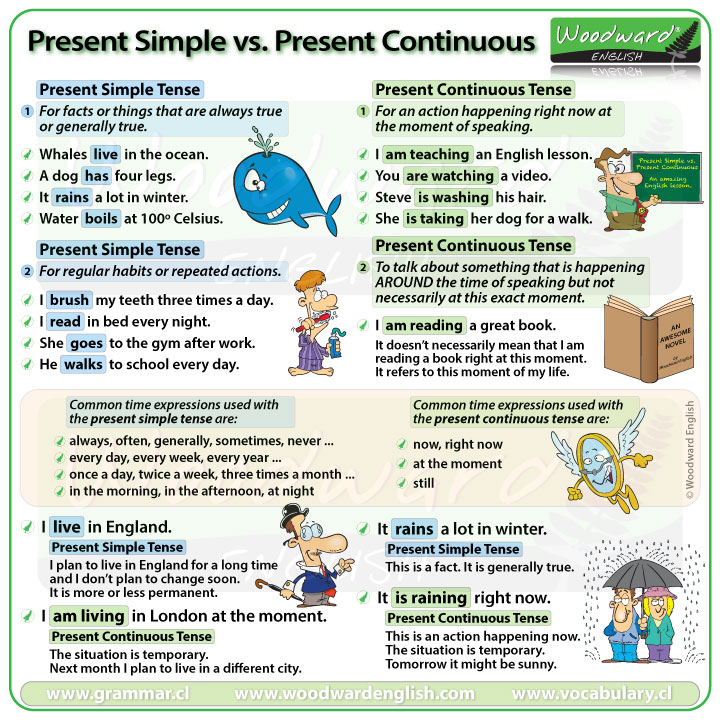
Next activities
See our other lesson about the Present Simple vs. Present Continuous Tense with more details and examples.
Try this grammar game to see if you understood the difference: Present Tense vs. Progressive Tense
See our notes about the Present vs Progressive vs Past Tense.
If you found this grammar guide about the Present Tense vs. Progressive Tense useful, let others know about it.


