
So - Neither - Either
English Grammar Rules
SO
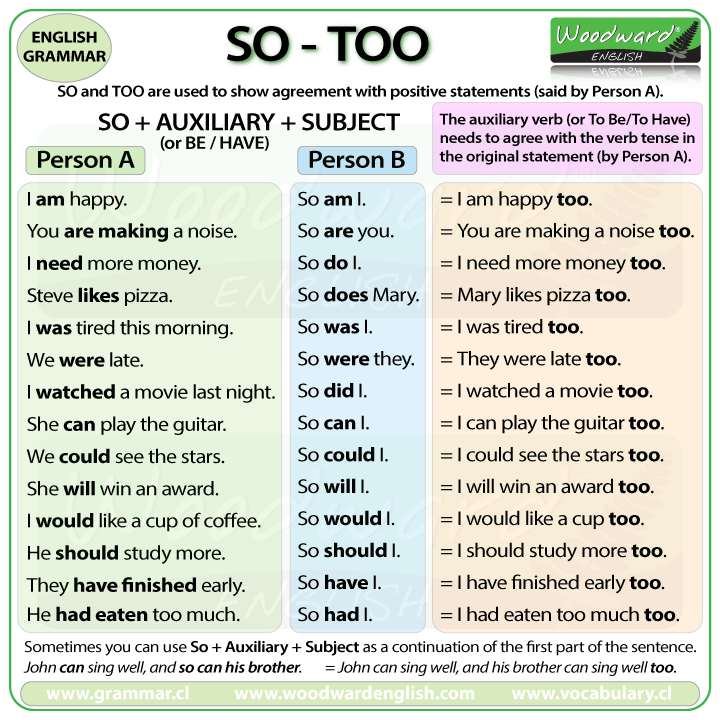
SO is used to show agreement with positive statements.
SO + Auxiliary/Be + Subject (pronoun)
The Auxiliary (or To Be/Have) needs to agree with the verb tense in the original statement.
It is similar to using TOO at the end of a sentence.
| Person A | Person B | |
|---|---|---|
| I am happy. | So am I. | = I am happy too. |
| I'm going to Brazil in the summer. | So am I. | = I am going to Brazil too. |
| You look nice today. | So do you. | = You look nice too. |
| Stephanie has a new boyfriend. | So does Mary. | = Mary has a new one too. |
| We went to the concert last night. | So did I. | = I went to the concert too. |
| I would love a coffee right now. | So would I. | = I would love a coffee too. |
| He will win a prize. | So will I. | = I will win one too. |
| They have finished their homework. | So have I. | = I have finished too. |
| I can speak two languages. | So can I. | = I can speak two too. |
| He should study more. | So should I. | = I should study more too. |
| We could see the mountains. | So could we. | = We could see them too. |
| My brother had eaten too much. | So had I. | = I had eaten too much too. |
Sometimes you can use So + Auxiliary + Subject as a continuation of the first part of the sentence.
- John can sing well and so can his brother.
(= John can sing will and his brother can sing well too)
See our complete English lesson about SO and TOO that is a part of our Free English Course: SO - TOO - English Grammar Lesson
NEITHER
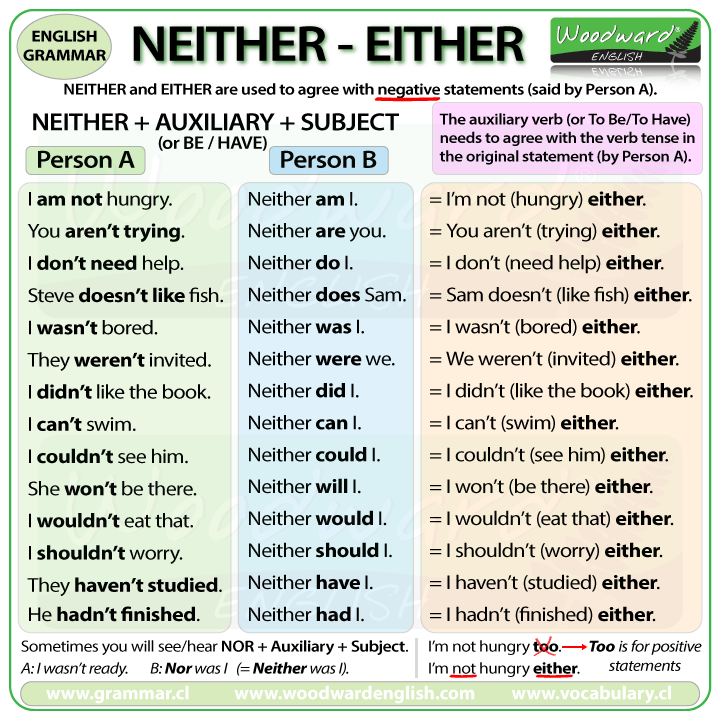
Neither is used to show agreement with negative statements.
Neither + Auxiliary + Subject (pronoun)
The Auxiliary needs to agree with the verb tense in the original statement.
It is similar to using either at the end of a sentence, although Neither is more commonly used, especially in spoken English.
A: I don't understand Spanish.
B: Neither do I. (= I don't understand Spanish either.)
A: I cannot swim.
B: Neither can I. (= I can't swim either.)
Sometimes people respond Me Neither instead of Neither + Auxiliary + Subject though this is very informal spoken English.
| Person A | Person B | |
|---|---|---|
| I am not hungry. | Neither am I. | = I'm not hungry either. |
| I'm not going to quit. | Neither am I. | = I'm not going to quit either. |
| They don't speak French. | Neither do I. | = I don't speak French either. |
| Stephanie doesn't eat meat. | Neither does Mary. | = Mary doesn't eat meat either. |
| Mary didn't go to the party. | Neither did I. | = I didn't go either. |
| I wouldn't like to do his job. | Neither would I. | = I wouldn't like to do it either. |
| He won't stop talking. | Neither will you. | = You won't stop either. |
| You haven't finished your meal. | Neither have you. | = You haven't finished either. |
| I can't reach the top shelf. | Neither can I. | = I can't reach it either. |
| You shouldn't talk in the movie. | Neither should you. | = You shouldn't talk either. |
| We couldn't hear him. | Neither could we. | = We couldn't hear him either. |
| I hadn't seen her before. | Neither had I. | = I hadn't seen her before either. |
See our complete English lesson about NEITHER and EITHER that is a part of our Free English Course: Neither Either - English Grammar Lesson
Summary Charts
Next activities
Try our interactive game to practice the difference between these words at: So - Neither - Either.
There is also two other games that are about the use of correct tenses with So + Auxiliary + Subject and Neither + Auxiliary + Subject.
So vs. Neither Practice Exercises
If you found this grammar guide about the difference between So, Neither and Either useful, let others know about it.


