
English Teachers: If you would like to use this Question Words wall chart in your classroom, then you can purchase a copy here: Question Words Wall Chart and Flash Cards.
Question Words in English
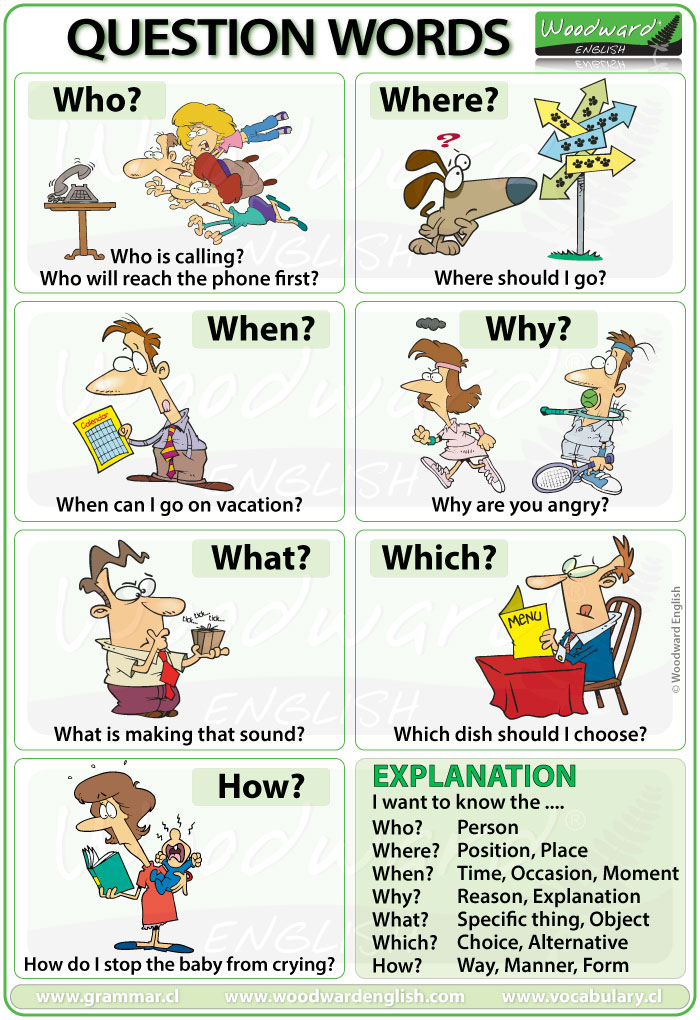
The most common question words in English are the following:
WHO
WHO is only used when referring to people. (= I want to know the person)
- Who is the best football player in the world?
- Who are your best friends?
- Who is that strange guy over there?
WHERE
WHERE is used when referring to a place or location. (= I want to know the place)
- Where is the library?
- Where do you live?
- Where are my shoes?
WHEN
WHEN is used to refer to a time or an occasion. (= I want to know the time)
- When do the shops open?
- When is his birthday?
- When are we going to finish?
WHY
WHY is used to obtain an explanation or a reason. (= I want to know the reason)
- Why do we need a nanny?
- Why are they always late?
- Why does he complain all the time?
Normally the response begins with "Because..."
WHAT
WHAT is used to refer to specific information. (= I want to know the thing)
- What is your name?
- What is her favourite colour?
- What is the time?
WHICH
WHICH is used when a choice needs to be made. (= I want to know the thing between alternatives)
- Which dish did you order – the pizza or the pasta?
- Which day do you prefer for a meeting – today or tomorrow?
- Which is better - this one or that one?
HOW
HOW is used to describe the manner that something is done. (= I want to know the way)
- How do you cook lasagna?
- How does he know the answer?
- How can I learn English quickly?
With HOW there are a number of other expressions that are used in questions:
How much – refers to a quantity or a price (uncountable nouns)
- How much time do you have to finish the test?
- How much is the jacket on display in the window?
- How much money will I need?
How many – refers to a quantity (countable nouns)
- How many days are there in April?
- How many people live in this city?
- How many brothers and sister do you have?
Read more about How much vs. How many.
How often – refers to frequency
- How often do you visit your grandmother?
- How often does she study?
- How often are you sick?
How far – refers to distance
- How far is the university from your house?
- How far is the bus stop from here?
Next activity
Try our interactive games to practice Question words:
Question Words 1 and Question Words 2.
English Teacher Resources
We have the following activities for parents and ELA / ESL teachers:
If you found this grammar guide about Question Words in English useful, let others know about it.


